
Building a Timetable That Works for Everyone
By TimetableAdmin Team · Academic Operations Editorial
Introduction
A timetable is more than a grid of periods and rooms. It is the daily rhythm of an institution — shaping how teachers teach, how students learn, and how resources are used.
When a timetable is built well, the school feels calm. When it is built poorly, everyone feels the friction.
Background
Most institutions still prepare timetables under significant time pressure at the start of each term. Coordinators juggle teacher availability, subject requirements, classroom capacity, and last-minute changes — often in spreadsheets.
The result is usually a workable timetable, but rarely a good one.
What "Working for Everyone" Really Means
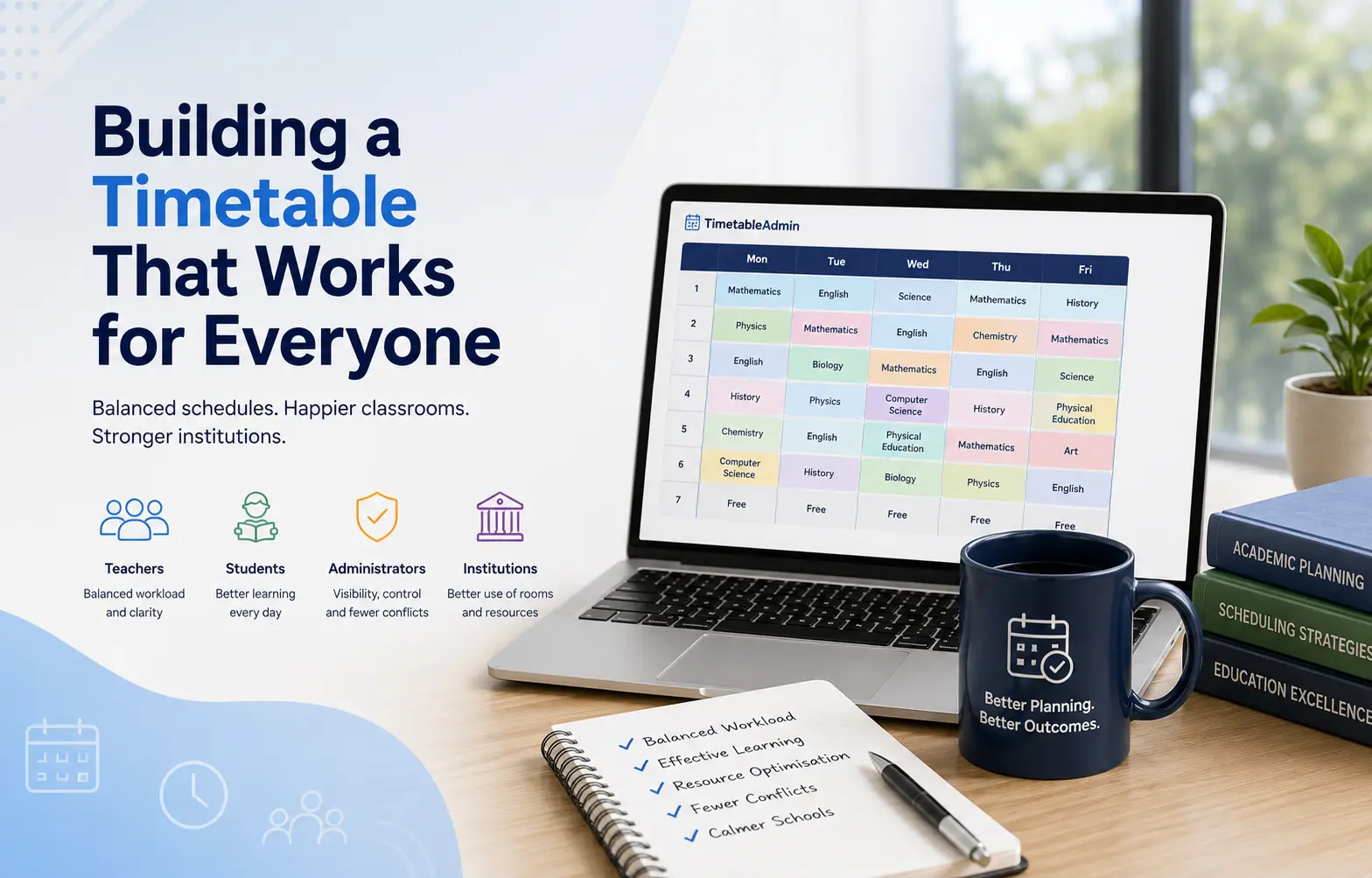
A good timetable serves four groups at once:
- Teachers — balanced workload, reasonable gaps, and clear expectations.
- Students — a healthy mix of subjects across the day.
- Administrators — visibility, easy adjustments, and fewer conflicts.
- The institution — efficient use of rooms, labs, and shared resources.
If any one group is neglected, the timetable eventually breaks down.
Practical Insights
A few practical habits make a large difference:
- Collect teacher availability before building the grid, not after.
- Cap consecutive periods for the same subject to protect attention.
- Reserve specialist rooms early — labs, computer rooms, sports areas.
- Leave a small buffer of unassigned slots for substitutions.
- Review the timetable weekly for the first month of every term.
TimetableAdmin Perspective
TimetableAdmin supports these habits directly. Teacher availability, subject requirements, and room constraints are captured once and reused across every generated timetable. Conflict detection runs continuously, so problems surface before they reach the classroom.
Summary
A timetable that works for everyone is rarely accidental. It reflects deliberate choices about workload, learning, and resources.
The institutions that treat timetable design as an academic exercise — not just an administrative one — consistently see calmer classrooms and better outcomes.