
What a Good Timetable Audit Looks Like
By TimetableAdmin Team · Academic Operations Editorial
Introduction
Every institution reviews its timetable at some point in the year. What separates a helpful review from a superficial one is structure.
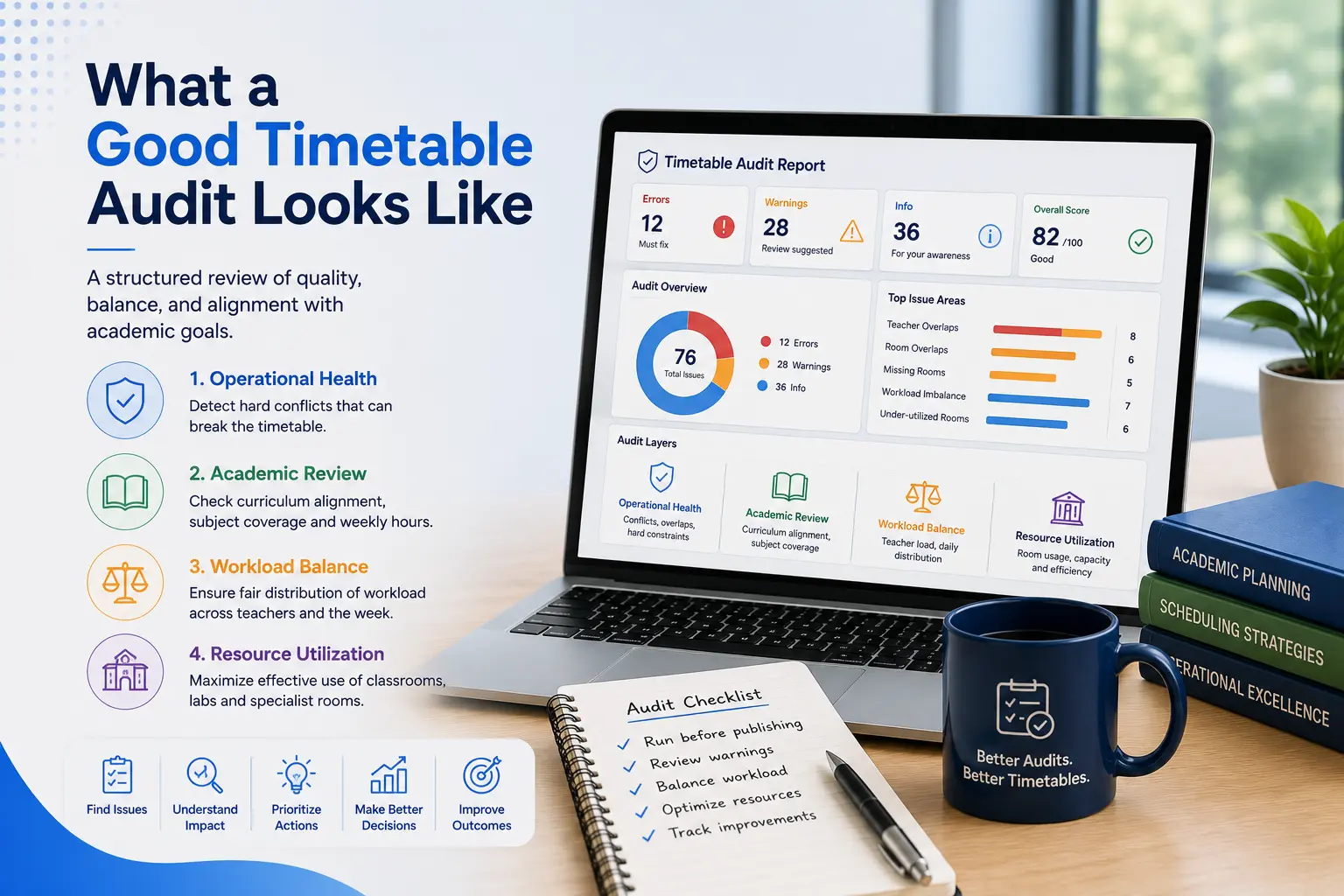
A good timetable audit answers three questions clearly: what is broken, what is unbalanced, and what could be improved.
Background
Traditional timetable reviews focus almost entirely on conflicts — the same teacher scheduled in two rooms, or a class assigned two subjects at the same time. These are important, but they are only the surface layer.
The Layers of a Good Audit
1. Operational Health
Are there hard conflicts that would prevent the timetable from running as written? Teacher overlaps, room overlaps, and duplicate subjects fall into this layer.
2. Academic Review
Does the timetable reflect the curriculum? Are weekly hour requirements met? Are teacher assignments consistent with what has been planned?
3. Workload Balance
Are teachers loaded evenly across the week? Do some days carry a disproportionate share of difficult subjects?
4. Resource Utilization
Are specialist rooms used effectively? Are there long stretches of unused capacity?
Practical Insights
- Run a full audit before publishing the timetable, not after complaints arrive.
- Treat warnings differently from errors. Warnings inform judgment; errors block release.
- Keep an audit history so trends across terms become visible.
TimetableAdmin Perspective
TimetableAdmin separates operational health from academic review by design. Operational issues stop generation. Academic warnings guide the coordinator without forcing a fix.
Summary
A good audit is layered, structured, and honest. It surfaces the issues that matter and provides the context needed to decide what to do next.